The Catholic University of America’s environmental sustainability initiatives have been recognized by The Princeton Review Guide to Green Colleges for the sixth year in a row.
This is the latest in a long list of honors. In 2024, the University received the Clean Energy D.C. Award and was named a federal Green Ribbon School.
The Princeton Guide's assessment is based on responses to a 25-question survey about sustainability-related policies, practices, and programs. The publishers also surveyed students about their experience, including administrator and student support for on-campus environmental awareness and conservation efforts.
Catholic University Committed to Environmental Sustainability
Catholic University has a long history of implementing environmentally sustainable measures, including a multi-year sustainability plan inspired by Laudato Si’ and the largest solar array in Washington, D.C. The West Campus array’s annual energy output is equivalent to taking 1,541 gasoline-powered vehicles off the road.
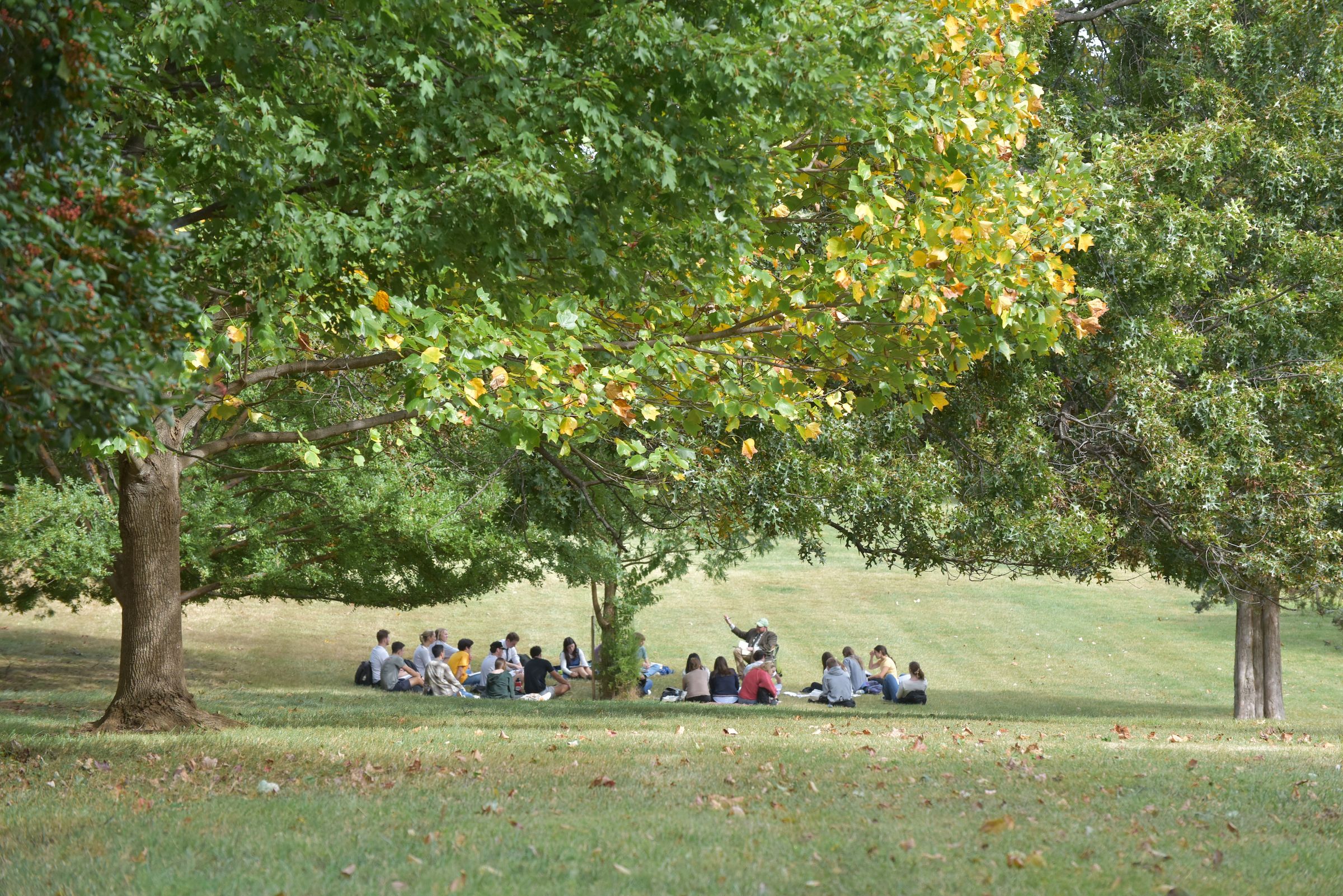
New and renovated campus buildings are LEED-certified, and University initiatives include clean energy, recycling and waste programs, stormwater management, expanding the tree canopy, community garden, the Cardinal Closet clothing exchange, and an annual move-out donation drive with students.
The Office of Campus Sustainability supports implementation of the sustainability plan and actively engages students, faculty, and staff in personal and larger-scale sustainability efforts.
The University’s commitment to environmental sustainability extends to both its degree programs and coursework across disciplines. For example, the School of Architecture and Allied Arts offers two- and three-year master’s degree programs in net-zero design, while the College of Engineering, Physics, and Computer Science offers a bachelor’s degree in environmental engineering and graduate programs at the master’s and doctoral levels, specializing in environmental engineering and water resources.