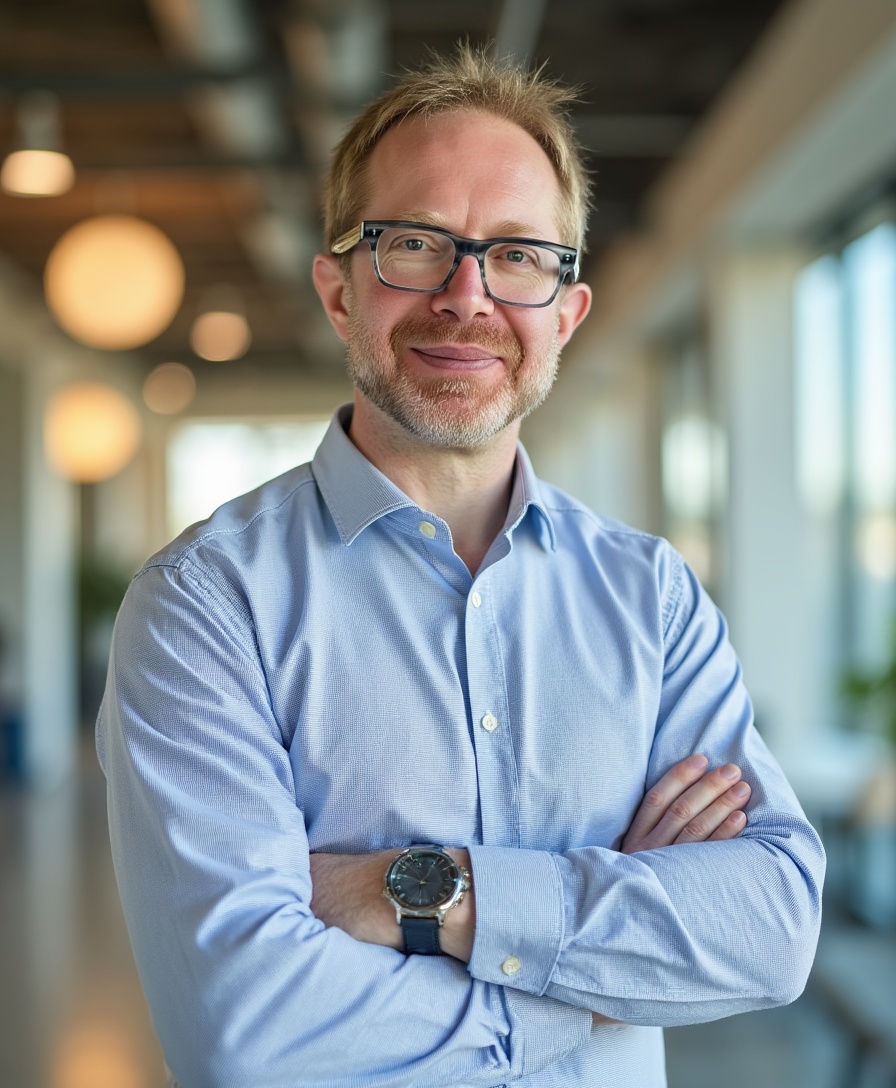
The Catholic University of America recently welcomed new faculty member Michael Doran, a biomedical engineer and translational scientist whose research spans regenerative medicine, stem cell biology, tissue engineering, and organoid technologies. Before joining Catholic University, he served as director of cell therapy at AstraZeneca and led stem cell engineering research at the Queensland University of Technology in Australia.
At Catholic University, he teaches and conducts research in regenerative and translational medicine, is ramping up his new laboratory, and directs the master of science in biotechnology program. In an interview, he shared more about his plans and opportunities for biomedical engineering on campus and in the Washington, D.C. metropolitan area.
Q: What attracted you to Catholic University?
A: Artificial intelligence is transforming education and accelerating scientific discovery. At the same time, public confidence in science has been challenged by concerns about research integrity, and many people are looking for stronger communities and institutions they can trust.
Universities have an opportunity to respond by offering more than technical education. Students will increasingly value ethical leadership, mentorship, and genuine community alongside academic excellence. I saw firsthand that Catholic University was delivering this deeper experience while teaching last semester, and that both Catholic and non-Catholic students truly valued this. My intuition is that as technology makes knowledge increasingly accessible, what will distinguish great universities will be the values they embody and the communities they build – and I would like to make a small contribution toward this outcome at Catholic University.
Q: What are your immediate goals at Catholic University?
A: My primary focus is teaching, extramural funding, and revamping the master's in biotech program, which is scheduled to launch fall 2027.
Q: Your career bridges academia and industry. What opportunities do you see for growth in biotechnology research and development?
A: By working in both industry and academia, I’ve gained invaluable insight into pharmaceutical development. About 50 to 65 percent of new drugs actually originate in academia and biotech spinoffs, rather than from big pharma. Academia offers irreplaceable freedom to pursue creative and high-risk solutions—the right environment to develop new medicines. In addition to my academic role, I run two biotech companies, allowing me to operate in two critical ecosystems simultaneously – and hopefully this will enable my team to maximize their impact.
Q: How do you approach mentoring the next generation of biotech professionals?
A: Whether someone works in academia, biotechnology, or the pharmaceutical industry, they’ll face competing pressures and difficult decisions. My goal is to prepare students for that reality by emphasizing scientific excellence, integrity, humility, and thoughtful decision-making.
In the classroom, we discuss not only the scientific and clinical merits of emerging technologies but also their practical and ethical implications, including questions of access, cost, and impact. We’ve fostered an environment where students are comfortable discussing complex issues, respectfully disagreeing, reconsidering their views, and acknowledging uncertainty. In my view, that’s an excellent foundation for developing professionals who will contribute responsibly and thoughtfully to both their organizations and society. I'm fortunate to be joining a department where that culture is already well established.’
Q: Biotech programs are part of a nationwide shift toward distance-learning formats. What’s the Catholic University campus advantage?
A: We’re experiencing a cultural shift. People are desperately searching for meaning and connection. Catholic University, with its emphasis on in-person classes and genuine faculty-student interaction, is particularly well positioned. Our small classes create a natural community. That on-campus culture combined with our location in the third-largest biotech hub in the U.S., makes this the right time and place.